Site clear.
Work moving.
IronPeak clears approved nonhazardous building debris from Greenleaf-area renovations, repairs, and demolition projects.
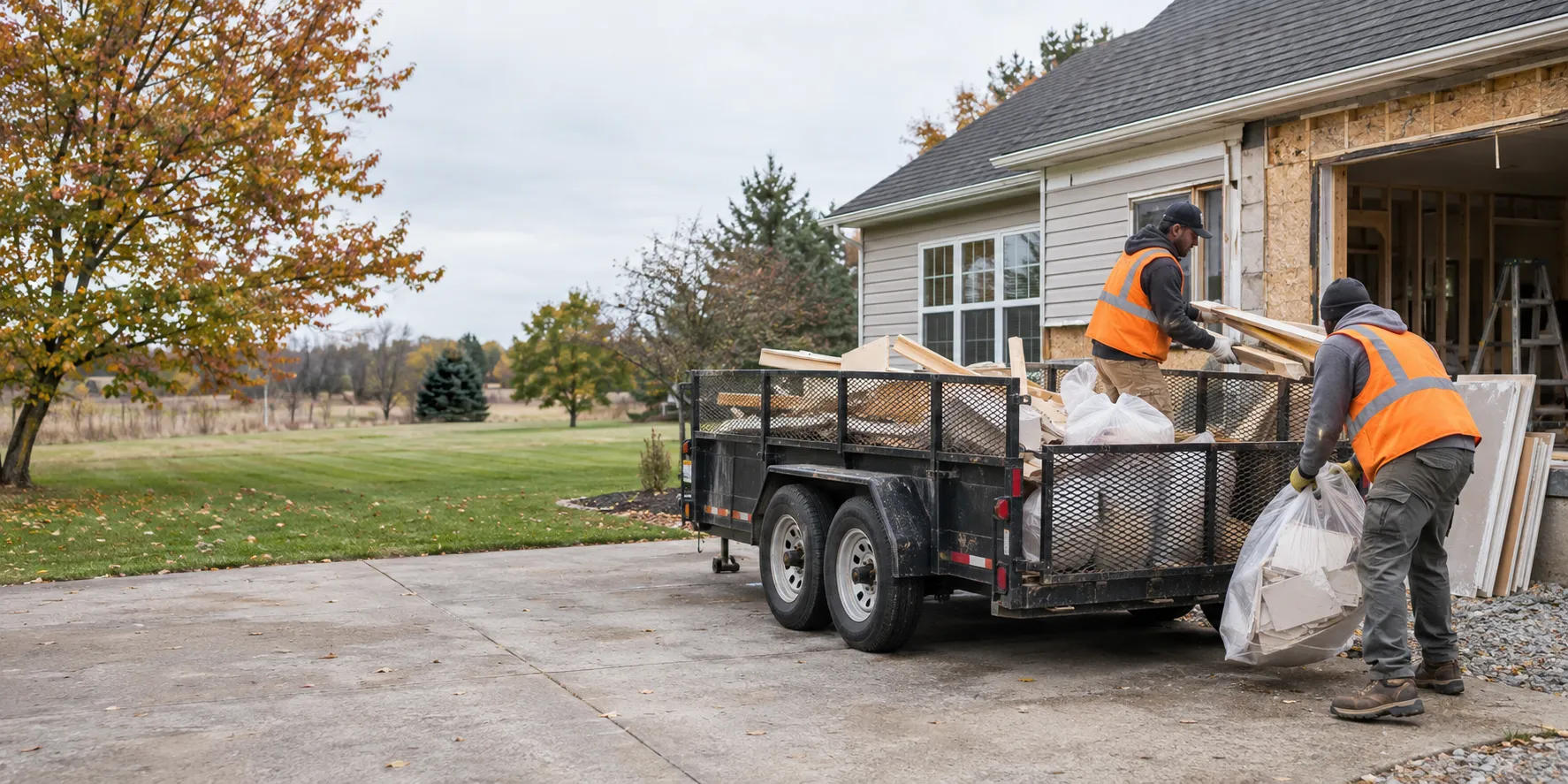
Torn-out 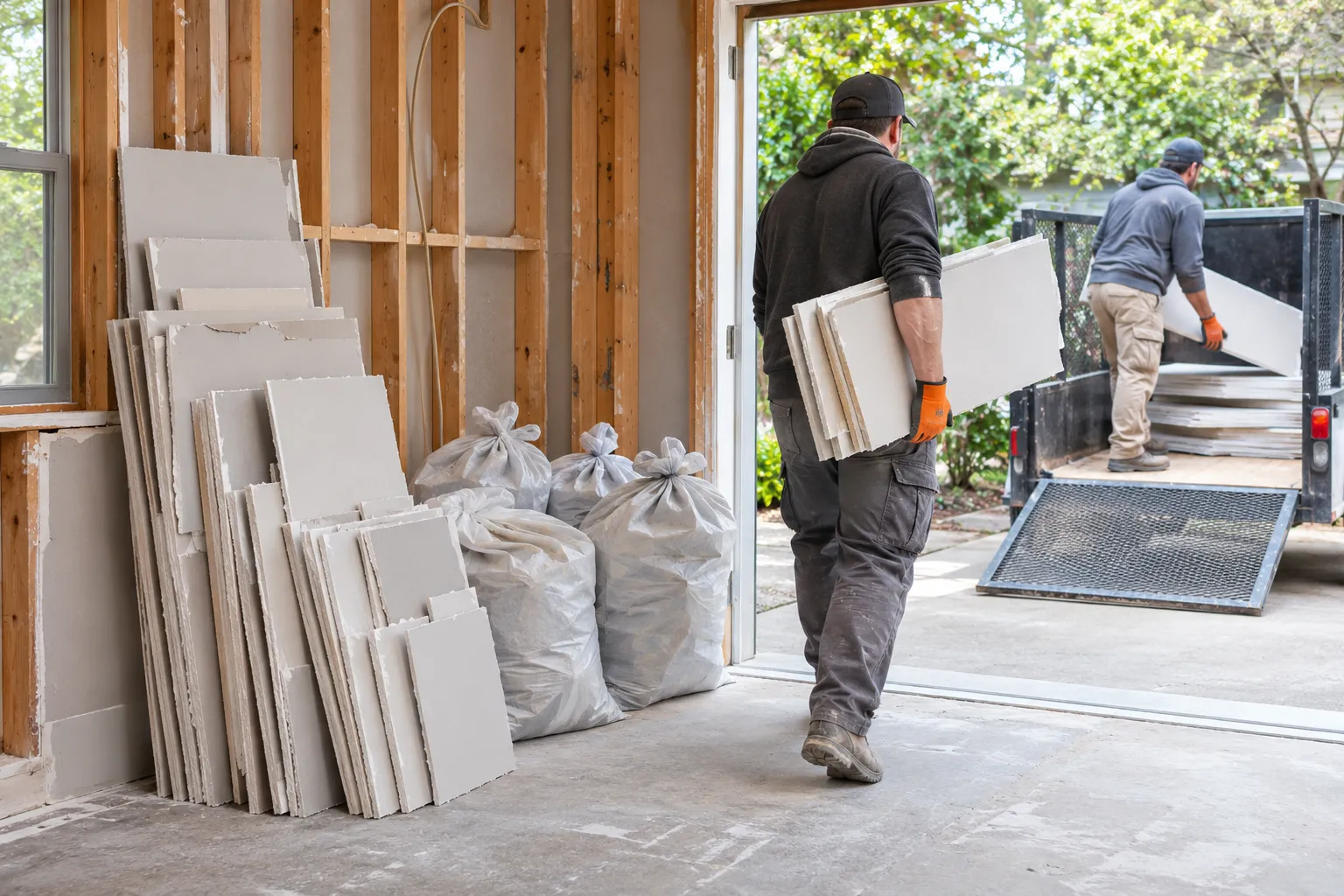 drywall and dense
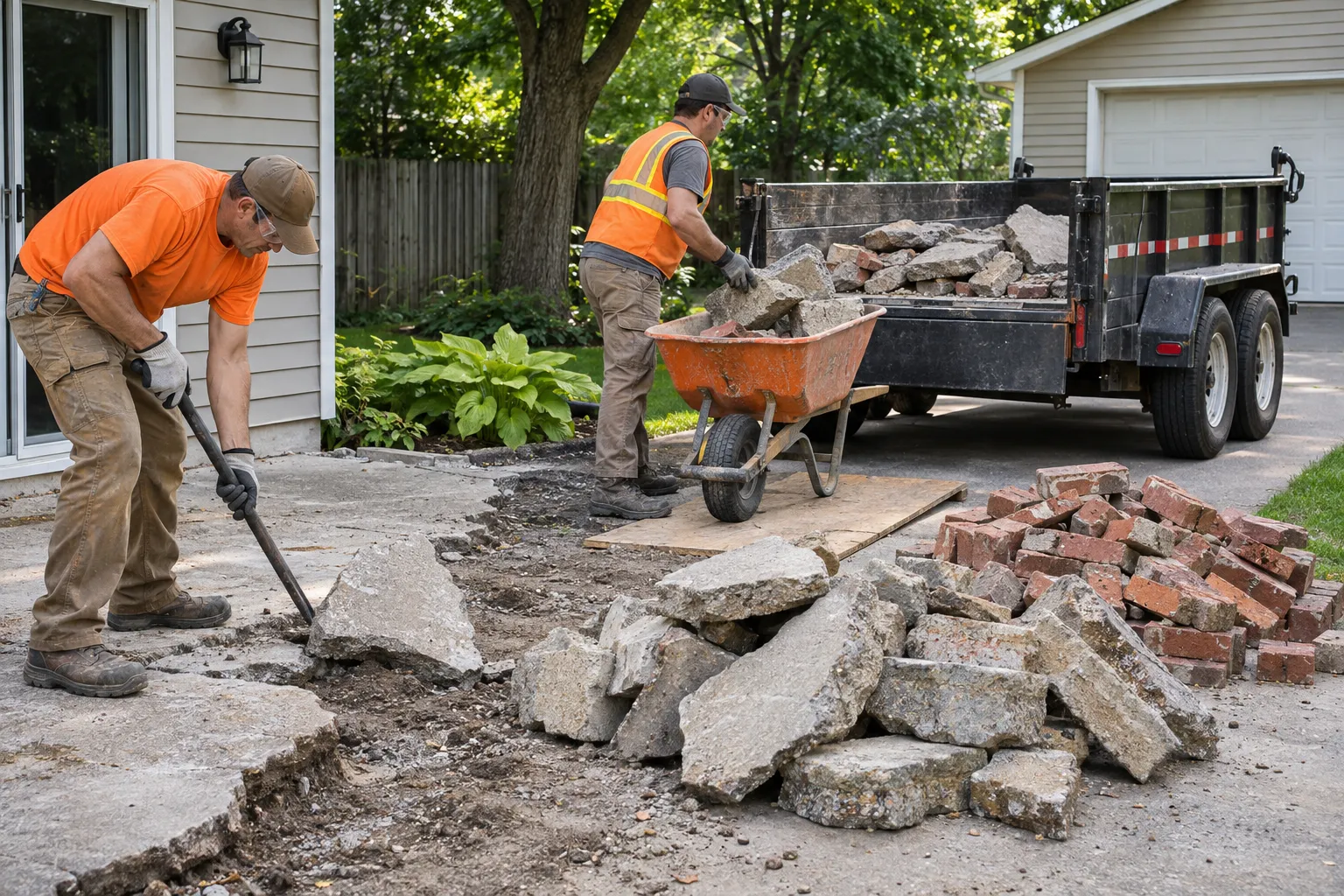 masonry need different routes out.
Seven ways to clear a jobsite
Choose the material or project type that matches the work. Each page explains scope, preparation, access, and estimate factors.
Construction Debris RemovalClear mixed, nonhazardous building debris from remodels, repairs, and active job sites.↗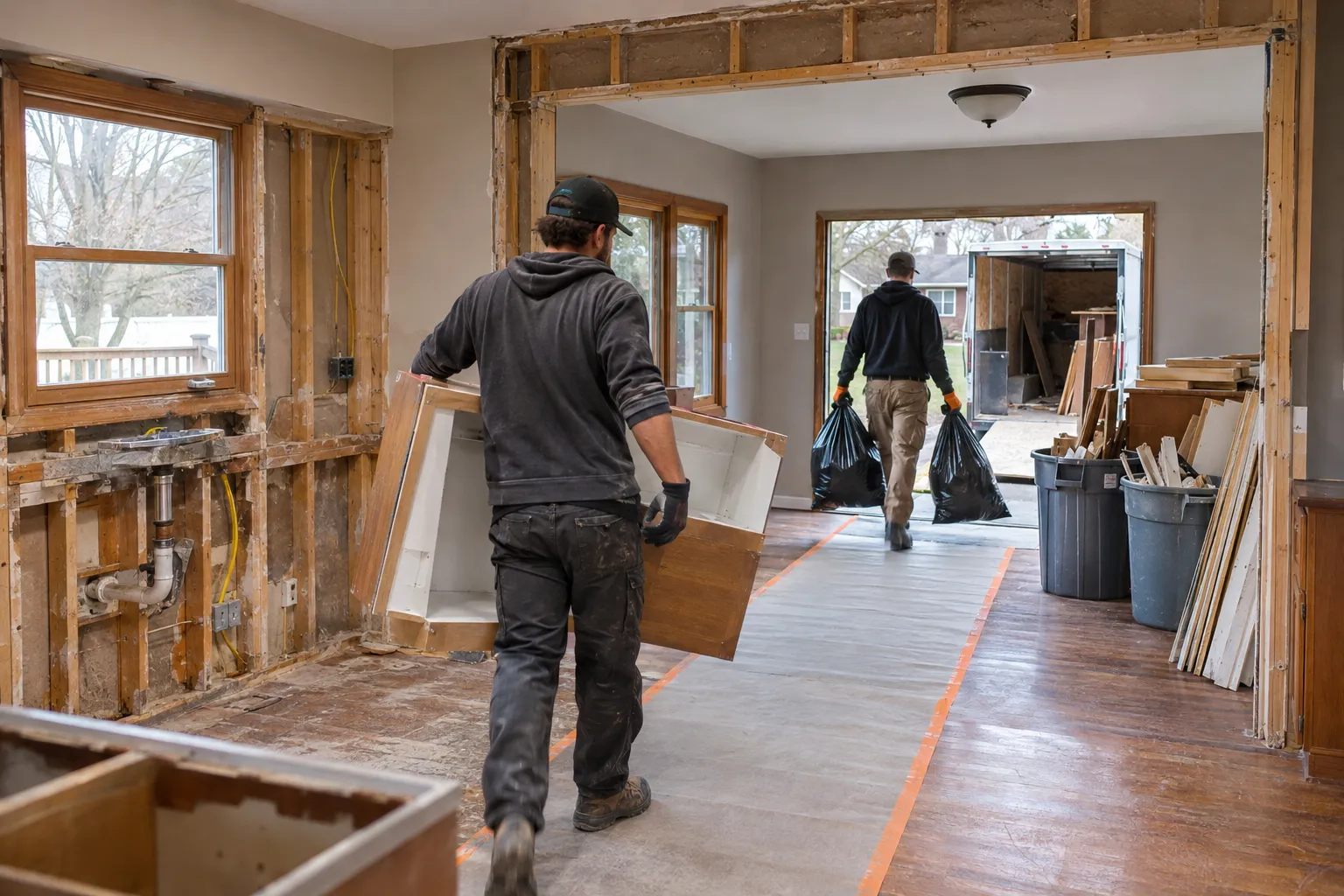 Renovation Debris RemovalMove remodel debris out through a planned path that protects finished rooms and keeps work moving.↗
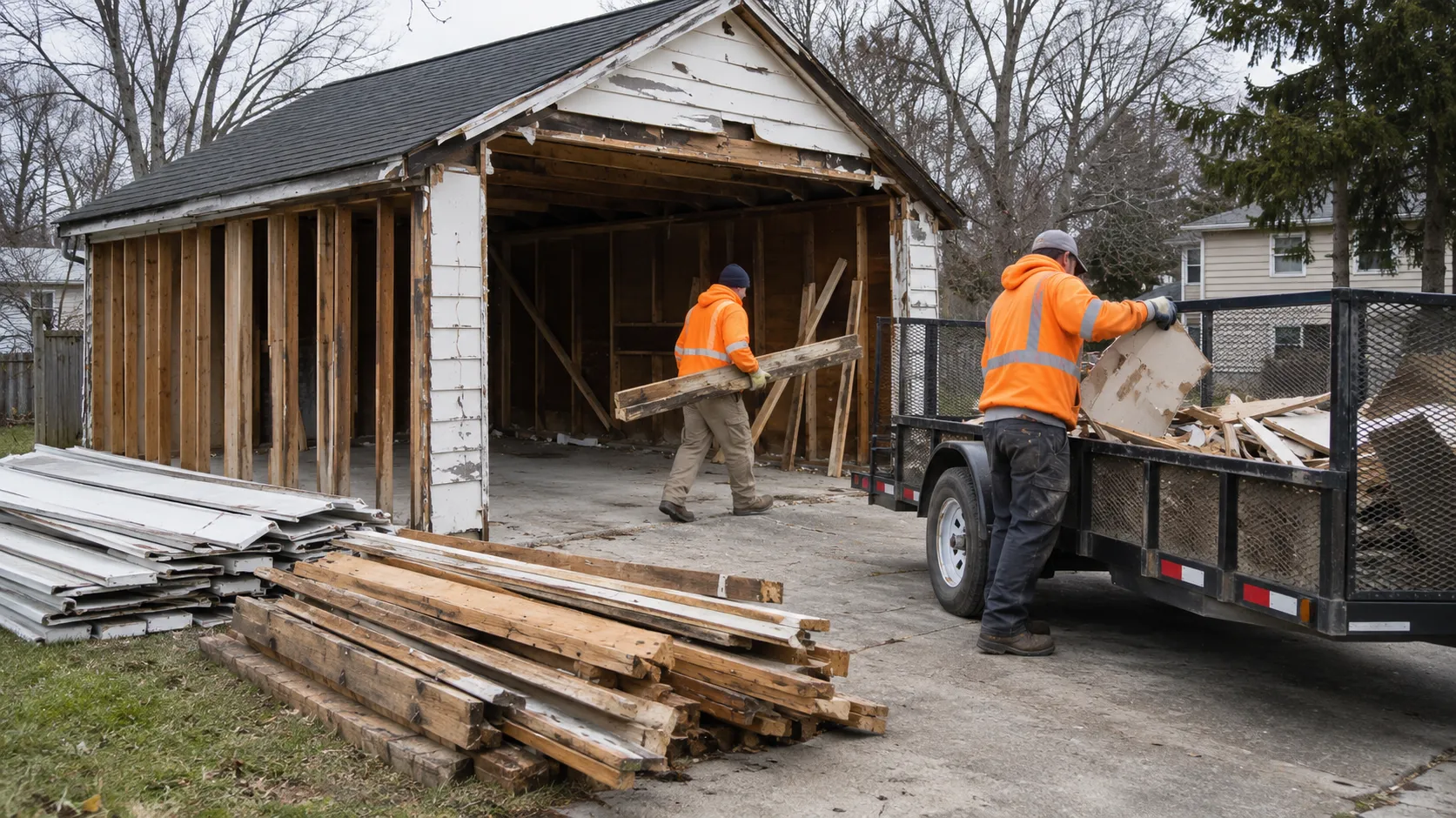 Demolition Debris RemovalLoad and haul material after permitted demolition or deconstruction work.↗
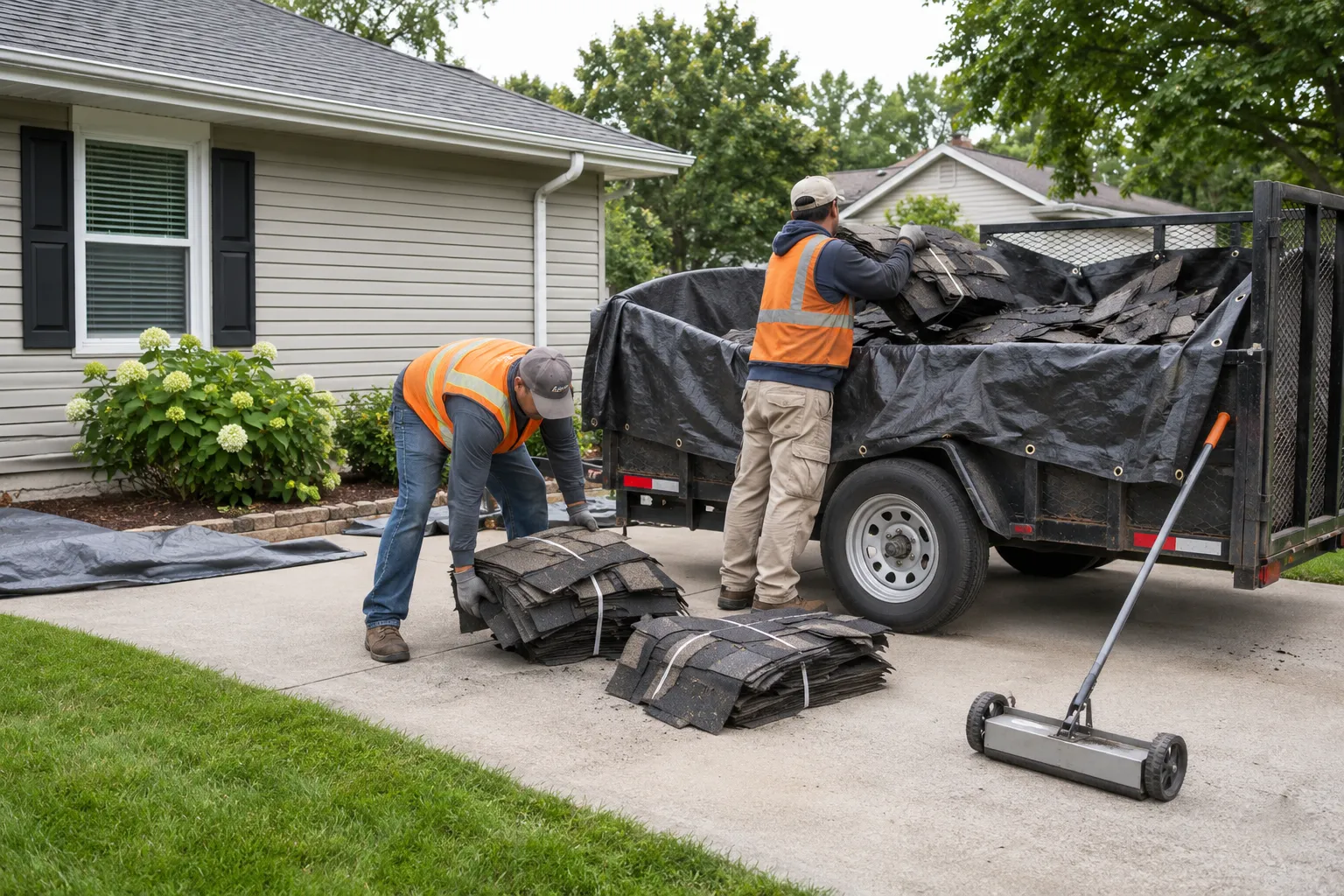 Roofing Debris RemovalCollect ground-staged shingles, underlayment, flashing, and roofing tear-off debris.↗Concrete & Brick RemovalHaul dense masonry from patios, walks, walls, and renovation work.↗Drywall RemovalRemove staged gypsum board, offcuts, and bagged drywall debris without spreading dust.↗
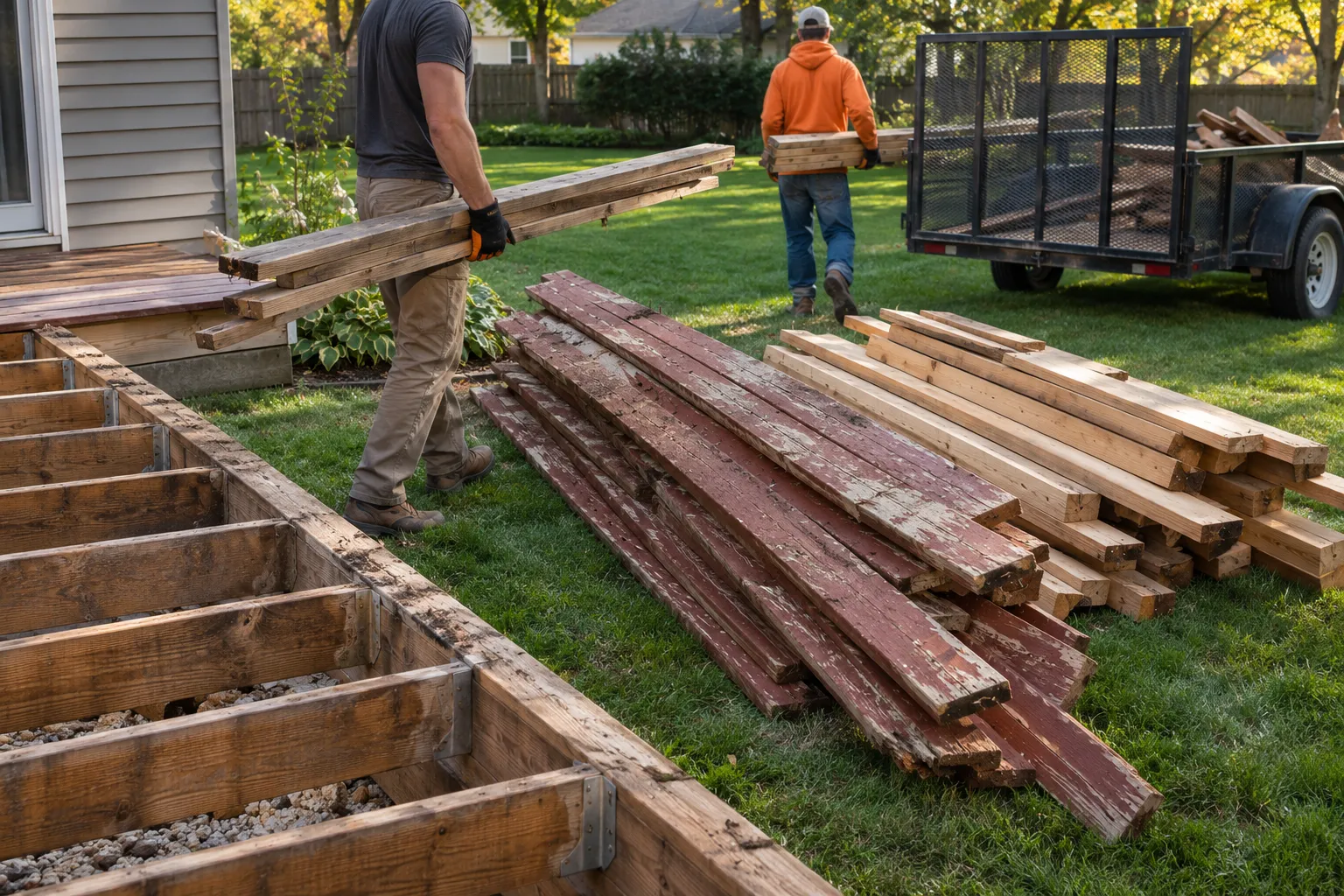 Lumber & Wood Debris RemovalClear framing, decking, trim, and wood offcuts while keeping treated material identified.↗
A cleaner route from pile to trailer
Good debris removal begins before the first lift. Material, access, and staging determine the plan.
- Describe the load. Share material types, approximate volume, and photos when available.
- Map the access. Note stairs, gates, soft ground, overhead limits, and the distance to vehicle access.
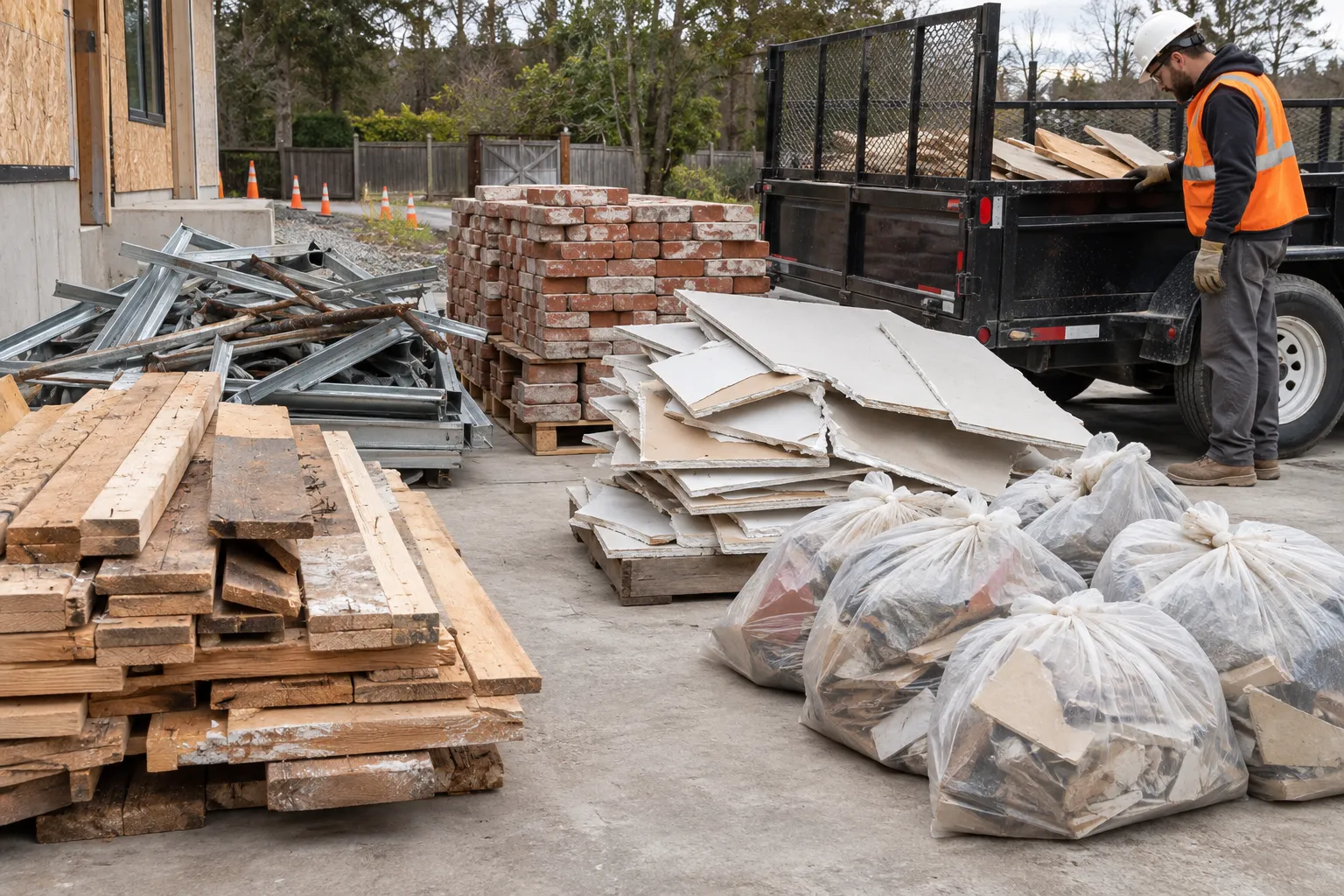
- Stage what you can. Keep heavy masonry, clean lumber, metal, drywall, and mixed debris distinct when practical.
- Confirm the plan. Review the work and estimate before removal begins.
Sorting creates options
Wisconsin DNR notes that separated construction and demolition material usually has more reuse and recycling paths than mixed debris. Keep clean masonry, metal, untreated wood, drywall, and mixed waste apart when the project allows it.
Read the sorting guideBuilt around Greenleaf
Proposed coverage includes nearby communities in Brown and Outagamie counties. Confirm the exact property and material before scheduling.
Questions before pickup
What construction debris do you take?
Approved nonhazardous materials can include lumber, drywall, fixtures, roofing debris, metal, clean brick, concrete, and mixed renovation waste. Share photos or a material list before scheduling.
What is not included?
Hazardous chemicals, unknown liquids, asbestos-containing material, lead-contaminated debris, and other regulated waste need separate assessment and handling.
How is an estimate prepared?
Volume, weight, material type, loading distance, stairs, gates, trailer access, labor, and disposal requirements all affect the estimate.
Should I sort the debris?
Sorting is helpful when practical, especially for masonry, metal, clean lumber, treated wood, drywall, and mixed waste.
Do you offer emergency service?
The operating business advertises 24/7 emergency availability. Actual timing depends on routing, crew capacity, and the material involved.
Clear the debris. Keep the project moving.
Tell us what was removed, how it is staged, and what the loading path looks like.